



07-06-2026, 08:39 PM
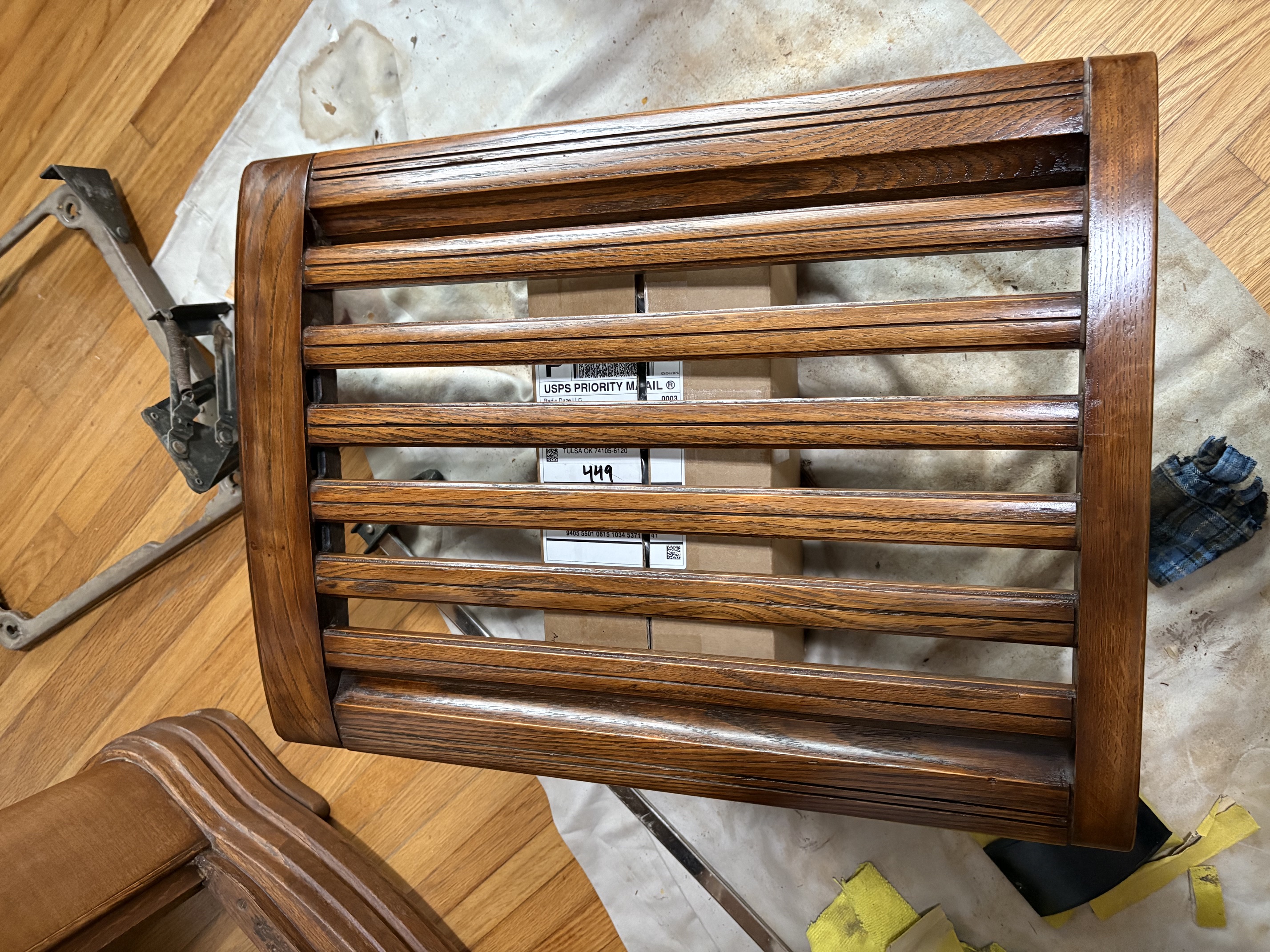
Wow, I am already enamored by shellac! I put a coat on the speaker panel, and it provides such a nice sheen! This is an incredible finish, and I feel like I’ve been looking for something like this. I don’t know how to describe it other than it looks like the wood has been polished, rather than a shiny overcoat layer on top of the wood.
I have done a bit of research on clear coats and enamels. As previously mentioned, I should have used the wood grain filler before toner if I wanted to use it. Since I had the mis-step, I then considered shellac. I’ve never used it before but I’ve read that, with repeated coats, it can fill in wood grain pores for a smooth and level finish. In fact, I also read that it is good practice to apply shellac between toner and lacquer to keep the wet lacquer from smearing the toner.
From my reading, it sounds like I definitely want to pursue the lacquer-over-shellac technique. Shellac has inferior temperature and humidity protection when compared to modern synthetic lacquers and polyurethanes; I certainly want a lasting enamel. The instructions on this particular shellac rule out polyurethane overcoats, so I am using lacquer. I used lacquer on my 46-480, so I am familiar with it. I opted for a semi gloss. I will start out by planning to apply two coats of shellac, lightly sanding between each coat with 320 grit sandpaper. Then I’ll apply one coat of lacquer. I’ll pause to apply the water slide decals, and finally I will finish with two more coats of lacquer.
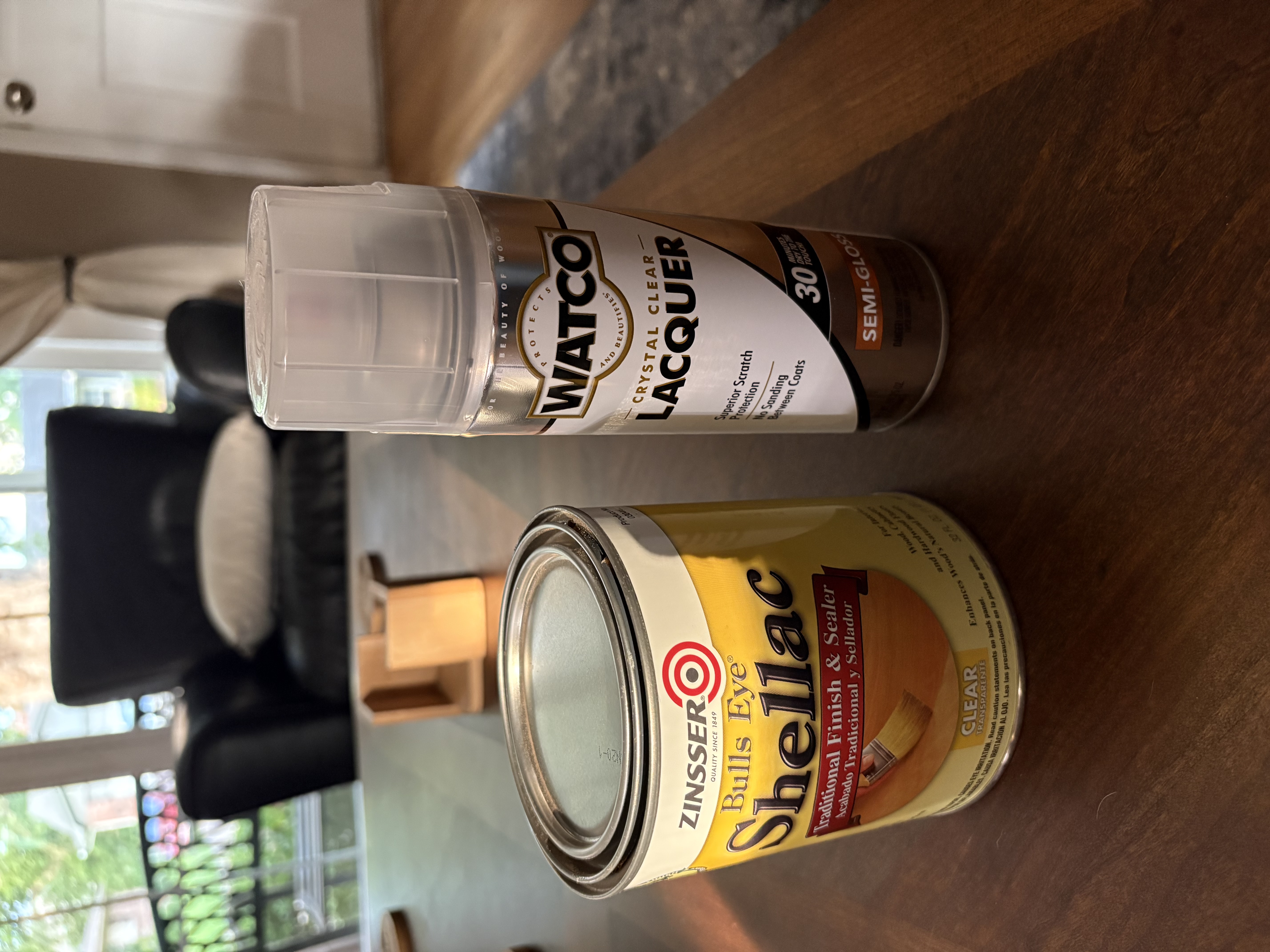
I have done a bit of research on clear coats and enamels. As previously mentioned, I should have used the wood grain filler before toner if I wanted to use it. Since I had the mis-step, I then considered shellac. I’ve never used it before but I’ve read that, with repeated coats, it can fill in wood grain pores for a smooth and level finish. In fact, I also read that it is good practice to apply shellac between toner and lacquer to keep the wet lacquer from smearing the toner.
From my reading, it sounds like I definitely want to pursue the lacquer-over-shellac technique. Shellac has inferior temperature and humidity protection when compared to modern synthetic lacquers and polyurethanes; I certainly want a lasting enamel. The instructions on this particular shellac rule out polyurethane overcoats, so I am using lacquer. I used lacquer on my 46-480, so I am familiar with it. I opted for a semi gloss. I will start out by planning to apply two coats of shellac, lightly sanding between each coat with 320 grit sandpaper. Then I’ll apply one coat of lacquer. I’ll pause to apply the water slide decals, and finally I will finish with two more coats of lacquer.
Joseph
Philco 39-750 EZ
Philco 46-480
Philco 47-1230
Philco 48-482
Philco 49-906


