

08-24-2026, 12:32 PM
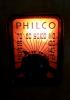
I just recently got a philco model j-1824-mh, u have no clue how to start it, how to work it at all, basically any information anyone has would be helpful as I can’t find any online. Thank you so much!

|
model j-1824-mh

08-24-2026, 12:32 PM
I just recently got a philco model j-1824-mh, u have no clue how to start it, how to work it at all, basically any information anyone has would be helpful as I can’t find any online. Thank you so much!
08-24-2026, 01:27 PM
Welcome to the Phorum!
 You have a 1961 set. Finding the operating instructions for these things is usually pretty difficult but the schematics for the electronics are available at various places, here's one example: https://www.antiqueradioschematics.org/philco.htm Unfortunately we do not have anything for that particular model in our own digital library but hopefully some folks on here will be able to give you some advice. If it has not been serviced recently its likely that the phonograph mechanics may need some cleaning and lubrication and the electronics may need some updating.
08-24-2026, 03:26 PM
It would be nice if more post 1956 service info could be added, I have some in the RCC manuals up to about 1965, but those were Canadian market models. I can't speak for Philcos of this time period but some manufacturers would paste the schematic on the inside of the cabinet, The record changer is likely a Voice of Music design, if not made by them outright, so service info and parts are out there for those, but it's usually hardened grease that is the problem in old record changers, that and dead cartridges if they are the crystal ones.
Regards Arran 
08-24-2026, 03:51 PM
Arran, I think Philco Canadian info would be e great addition if there are folks who have it to donate. Joe
Courage will follow when Faith takes the lead.
08-24-2026, 04:44 PM
If folks have Philco documents, schematics etc. that we don't currently have in the library, we can add them. Just PM me and we can chat about the best way to get them scanned and uploaded.
08-25-2026, 07:57 AM
Hi SummerCompton,
Welcome to the Philco Phorum and thank you for joining!!! We are a "Family Friendly" group with interests primarily with Philco products but also spanning the entire history of Radio including non-Philco products, and we are always willing to give you friendly advice. Please keep posting!! Please do take time to look at the Phorum Rules and "What NOT to post". Also explore the Phorum and don't forget to stop in at "Old Ron's Bar and Grill" for a virtual burger and brew, and to shoot the breeze with the gang! Now, to your particular unit: This is a rather wild set, certainly interesting and a great example of early Stereo phonos. The self contained amplifier does have external connections for a "tuner" (meaning an AM FM or FM Stereo radio that does not have a power amplifier). You can also hook up a CD Player, MP3, computer, your smartphone (if yours had a headphone output), your Guitar, etc. In addition, this set has a built in spring style reverb unit, which alone, may be worth money. This is not a Fisher, Scott or McIntosh (Serious HiFi equipment with a price to match), but represents the higher end of then available "everyman" ("everywoman too") HiFi from the common radio and TV manufacturers (Philco, RCA, Motorola, Magnavox, Zenith, etc.). For the time, this is a high power (30 watts total) music power, conservatively rated (RMS, IHF, etc.) The changer is not a V-M changer but is likely a Glaser Seers. This set would have employed a "ceramic" stereo cartridge. Not as high end as a magnetic cartridge but much nicer than a "crystal" cartridge. This is a 2 channel set where the 2 channels share a common output transformer for a "Center Channel Woofer- Midrange" speaker channel for low and middle frequencies, and 2 smaller output transformers for the Left and rRght Mid and High frequencies for which there would be more directionality. Motorola was famous for this concept. The theory is that there needed to be a center of stage presence and that sound frequencies below about 300Hz are "non-directional; meaning that a person can't determine where the sound comes from. This fell out of popularity throughout the 60s and 70s, but is now back in vogue with AV and Home theater receivers using small speakers for left and right front, front center, left and right rear and Subwoofer. Right now, our library does not have a schematic for this set, but the schematic is actually located inside the cabinet. If you can take a good picture (but less than 5 MB) and upload it, it would be helpful. Operation of this set is similar to how other Stereo phonographs work. The input selector knob (marked Phono / tuner / tape, etc.) will select the input to the amplifier. Loudness (volume), balance, base and treble controls are as on most other audio equipment. On Off function may depend on the input selector. Turning the selector to tuner will possibly turn on the amp. Turning to phono may turn the amp off unless the record changer is on. This scheme allowed for the amp to turn off after the last record is finished. The other control that is not familiar to most would be the "reverb" control turning to left minimizes Reverb; turning to the right increases reverb. Now, what to do: This is a 65 year old phono and there are parts that should be replaced. Generally, it is not a good idea to just power the set up. If you did and there is a loud hum, the power supply electrolytic filter capacitors are bad. This is common. In addition, most of the other capacitors can go bad. Therefore, the standard procedure for almost all hobbyists is to replace all capacitors. In addition, the switches and potentiometers will need to be cleaned. The record changer is a whole other thing. It needs to be at least partially disassembled and all grease be removed and replaced. In addition, the rubber "capstan" wheels are likely dried out. How much you do with this depends on what your skills, knowledge and experience are. The power transformer does generate dangerous high voltage (at least 600V plate to plate for the rectifier) so care must be taken while working on live equipment. Do not be discouraged! As others chime in, and as you post your progress, we can and will help!! "Do Justly, love Mercy and walk humbly with your God"- Micah 6:8 "Let us begin to do good"- St. Francis Best Regards, MrFixr55
08-25-2026, 02:28 PM
Bob;
Ordinarily I would offer schematics but the scanner part of the printer I have won't scan. I'm guessing that it's a driver issue as it's at least 5 years old, hopefully I can resolve it without buying another printer. Anyhow the number system Philco used in their Canadian products was different, and they didn't make identical product lines, they would skip some U.S equivalents, and others would be their own creations. I think I found a similar unit in the RCC manual, but there are no photos of the cabinet so I can't be sure. Regards Arran
08-25-2026, 10:39 PM
No worries Arran, maybe later but I just wanted folks to know that we do have a place for storing and making available documents, photos, schematics etc. Once in awhile we even get a live photo of a Philco model that we only had a catalog drawing of, so we add that into the Gallery.
08-26-2026, 03:13 PM
Hi Summer Compton,
More info for you. Below is a link to a U tube video that shows your record changer in operation: https://www.youtube.com/watch?v=oENhyrteNQQ&t=66s Here is a link to Radiomuseum where a service manual for your record changer can be downloaded. As a Radiomuseum guest, you can download 3 pages in one day. Follow the download instructions carefully. Radiomuseum is a very good website; the problem is that it is loaded with adware. make sure that you click on Radiomuseum's download, not an adware download. Let me know if you need help with that: https://www.radiomuseum.org/r/glaserstee_gs_77.html Here is a link to a thread on AudioKarma covering a very similar model to yours. (Actually the same model, just a different style cabinet): https://audiokarma.org/forums/threads/ph...se.937247/ "Do Justly, love Mercy and walk humbly with your God"- Micah 6:8 "Let us begin to do good"- St. Francis Best Regards, MrFixr55
« Next Oldest | Next Newest »
Users browsing this thread: 1 Guest(s) |

|

|


