|
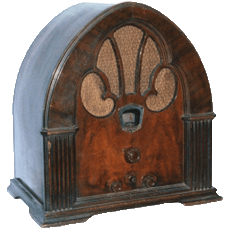
Early 30s Philco Wiring Color Codes
|
|
07-03-2007, 02:25 PM
Post: #1
|
|||
|
|||
|
Early 30s Philco Wiring Color Codes
From the May, 1934 issue of the Philco Serviceman, page 4:
COLOR CODE FOR PHILCO WIRING Philco has adopted the standard R.M.S. color code as employed by various other radio manufacturers. This coloring of wires is held wherever possible, and there are only a very few exceptions where the standard coloring is not used. The chart below indicates the various colors of wires and the types of circuits in which these wires are used: __________________________________________________ RED . . . . . . . . . Filaments and odd wires BROWN . . . . . . . Cathodes and grounds WHITE . . . . . . . . B+ and screens of output pentodes WHITE w/BLACK tracer and/or BLACK w/WHITE tracer . . . . Plates GREEN . . . . . . . . Grids and screen grids __________________________________________________ This may seem like a limited selection, but remember, this is 1934 and manufacturing standards are still being formed, hashed out and adopted among the many, many radio manufacturers of the day. Every radio manufacturer's Engineering Department had the "not-invented-here" attitude to overcome as well when the industry was trying to standardize things. Nowadays, after weathering and oxidizing under temp extremes and collecting dirt and dust for 70+ years, they all tend to be a muddled dark-ish blah color that obscures the original colors. Previous repairs from the 30s to 40s may have also introduced a new piece of wire here and there as well, also confusing everything. Chuck Schwark, The Philco Repair Bench ![]() http://www.philcorepairbench.com |
|||
|
07-04-2007, 04:29 PM
Post: #2
|
|||
|
|||
|
Chuck,
Did these basic color codes hold through the 40s, or were there different color codes then? The anode wires from the power transformer on my 40-150 are a deep yellow, and are marked that way on the schematic. Some of the rubber coated wires I have been replacing seem to be light yellow rather than white, while some are clearly white. I take a knife and cut off a thin layer of insulation. If it is yellow all the way through, I've been using light yellow wire to replace. If it shows white under the surface, I use white. About half way through the last radio I worked on I decided the yellow color was due to aging, so I started using white for all the white and yellowish wires. What do you think? Also, what kind of wire do you use? The Philco Restorer emphatically recommends 20 gauge stranded, cloth covered wires to replace the rubber insulated ones, so that is what I've used. Lately I've been thinking that modern vinyl wires might look more like the rubber covered ones, although the colors wouldn't be right. Last question: do you know where to get the thin, cloth covered wires used for the speakers and field coils? Those wires are marked with colored tracers, so I don't want to use solid colors if I can help it. Some of the insulation is getting a bit brittle. John Honeycutt |
|||
|
07-04-2007, 05:20 PM
Post: #3
|
|||
|
|||
|
No, don't believe so. As you see the color code above was published in 1934, early on in Philco's history. I do not know of any subsequent color code used, unless Philco adopted an early EIA standard. Maybe Ron does.
Chuck Schwark, The Philco Repair Bench ![]() http://www.philcorepairbench.com |
|||
|
« Next Oldest | Next Newest »
|
User(s) browsing this thread: 1 Guest(s)

Home
Search
Members
Donate
Rules
Facebook
Help

![[Image: philog3tiny.gif]](http://www.philcorepairbench.com/images/philog3tiny.gif)