



04-05-2026, 10:41 AM
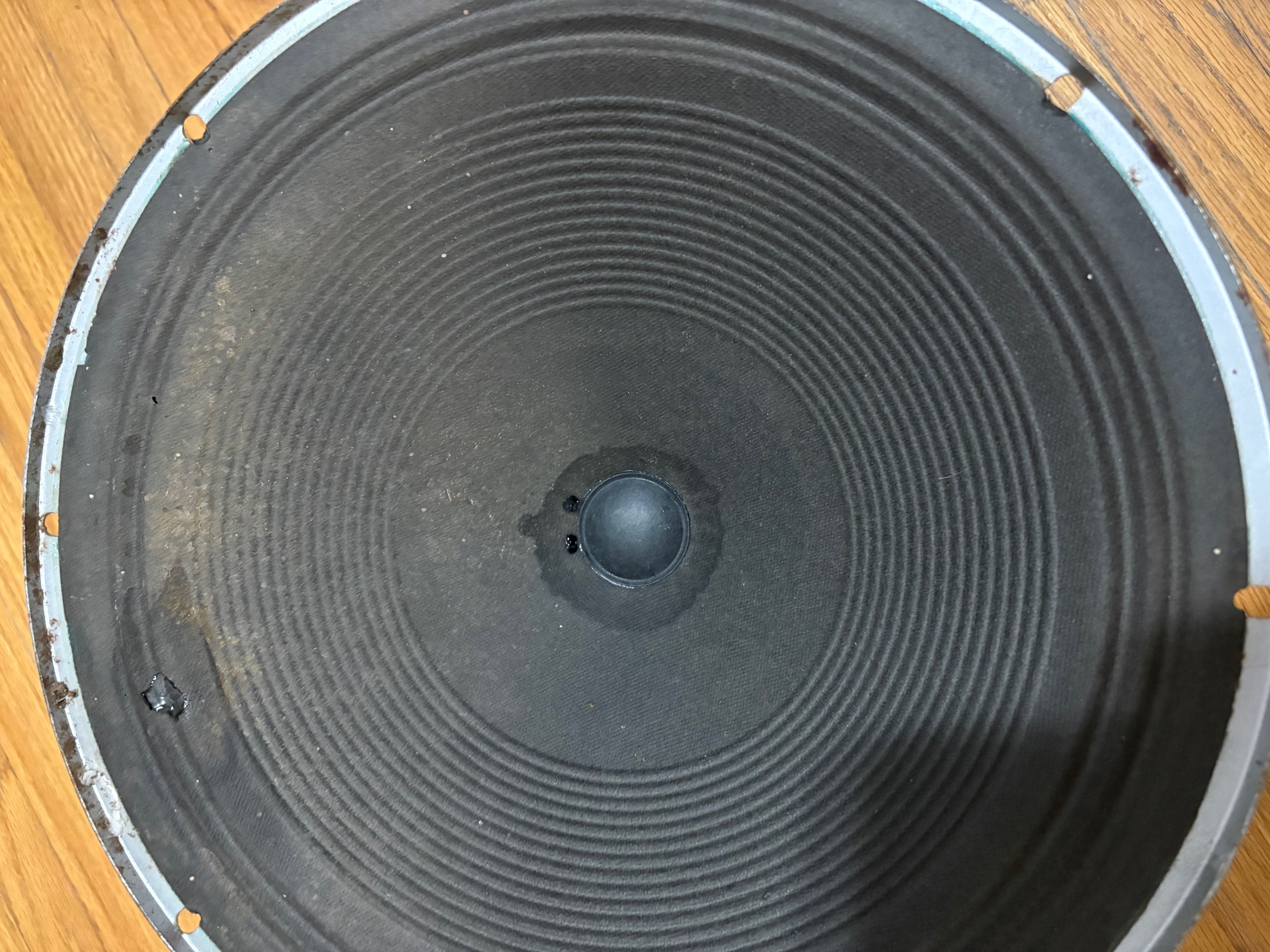
I've stayed busy lately with a few radios, but I've likely spent the most time on the cabinet for this 47-1230. I've toiled away with more veneer repairs, but first we'll talk about the speaker repairs. I took this one to Speakerworks as well. Here's a photo of it with a small patch at the top of the cone and a new dust cap.
I got to talking away with David (the store owner) about our ongoing projects, and he asked me what I'd be working on that would have a 12" driver in it. I was showing him some photos of the console, and he asked me about the turntable. In particular, he wanted to know if I was going to restore it. I told him no, that I was instead thinking of finding a 1950 or newer turntable to install so I could also play 33's and 45's. To just my luck, David had been sitting a newer turntable that he'd rebuilt for a customer who never came to pick it up! This is a 1970's GE Made Made Diamond turntable (the Man Made Diamond series was made in the 1960s and 1970s, but I conclude that this one is definitely from the 1970s because they featured a metal tone arm for the stylus in earlier models, but went to chrome-colored plastic arms in the 1970s). It's a bit newer than what I was originally looking for, but I think it will do well! I decided to settle for this one for a few reasons, actually:
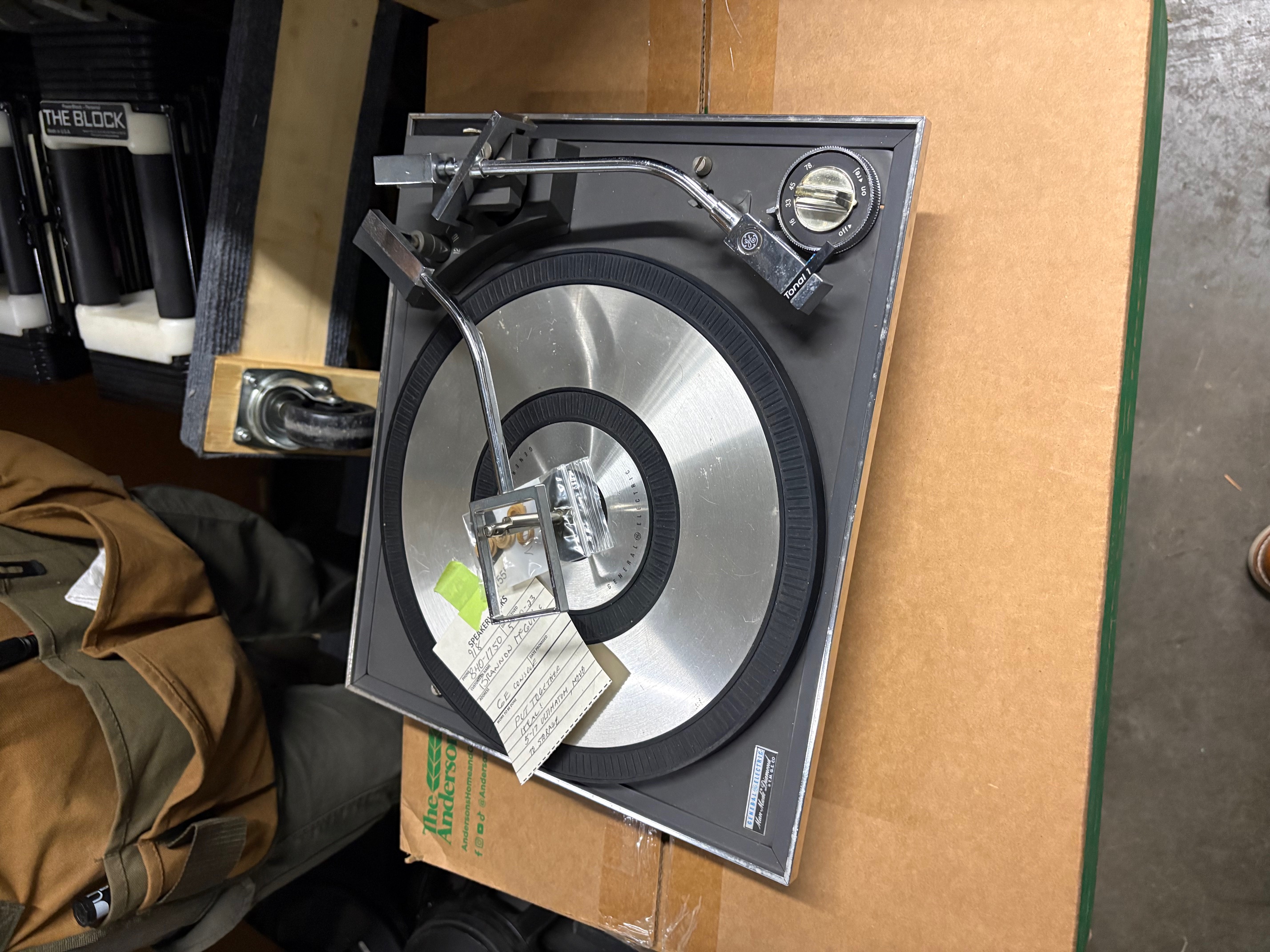
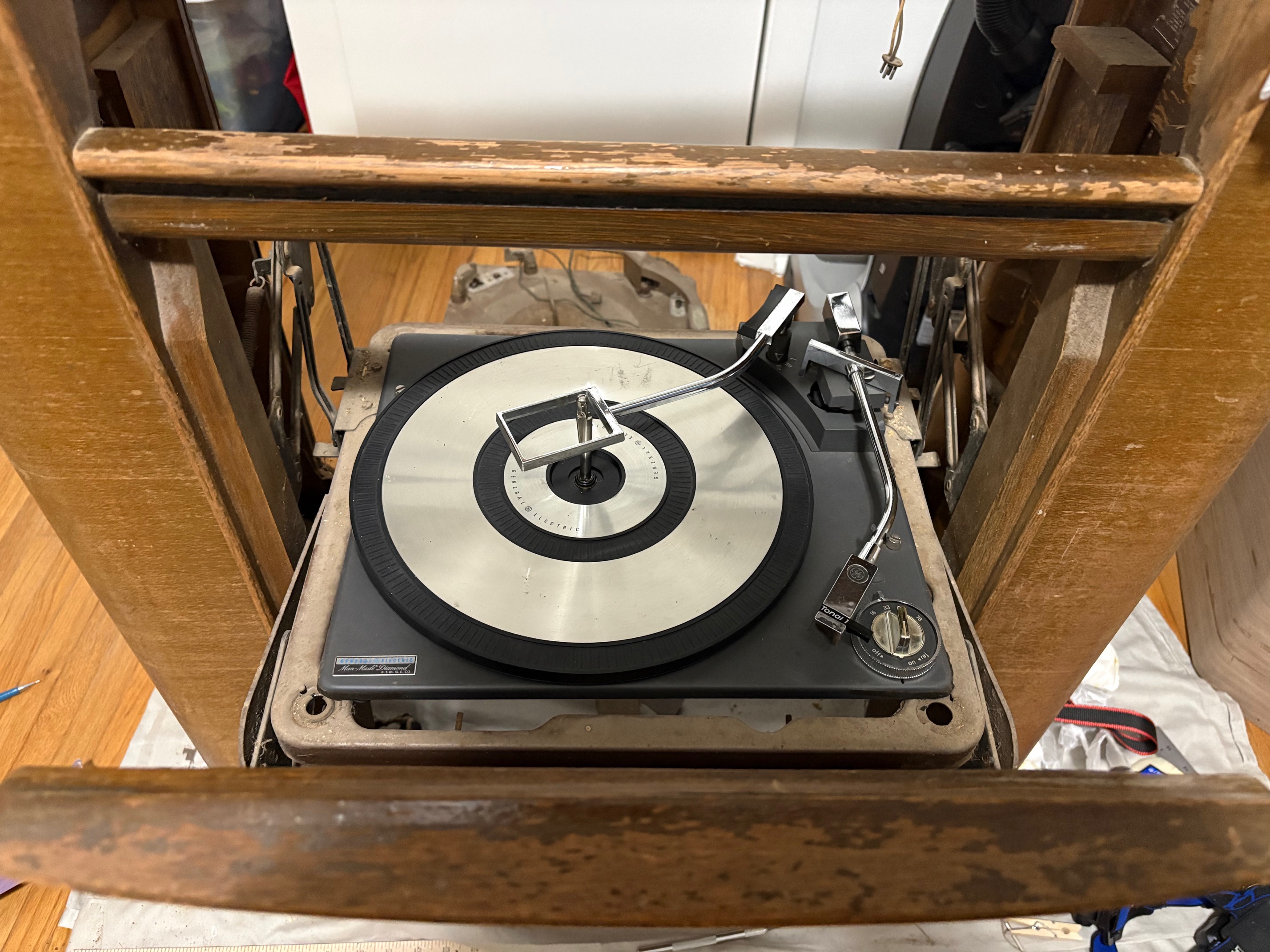
Here are some photos of the turntable. You can see I removed the chrome-colored plastic trim, because it didn't match the style of the Philco. I will need to fashion a flange plate to adapt it to the existing tray, but that won't be too difficult.
Back to the discussion of veneer work. Here's a quick photo of the top panel I re-veneered, reinstalled in the console. I've dry-fitted it here, because I need to do a few more repairs before permanently installing it.
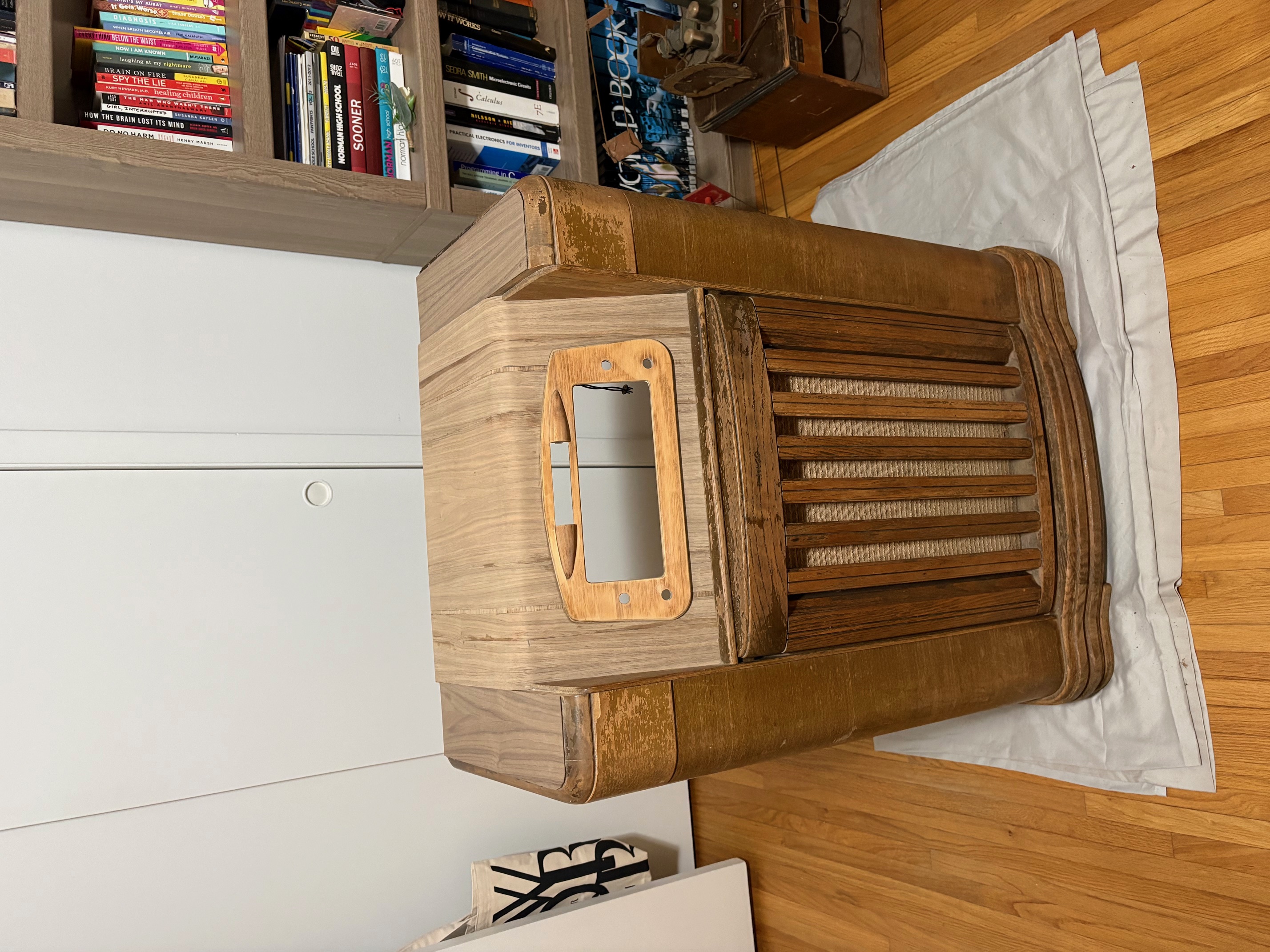
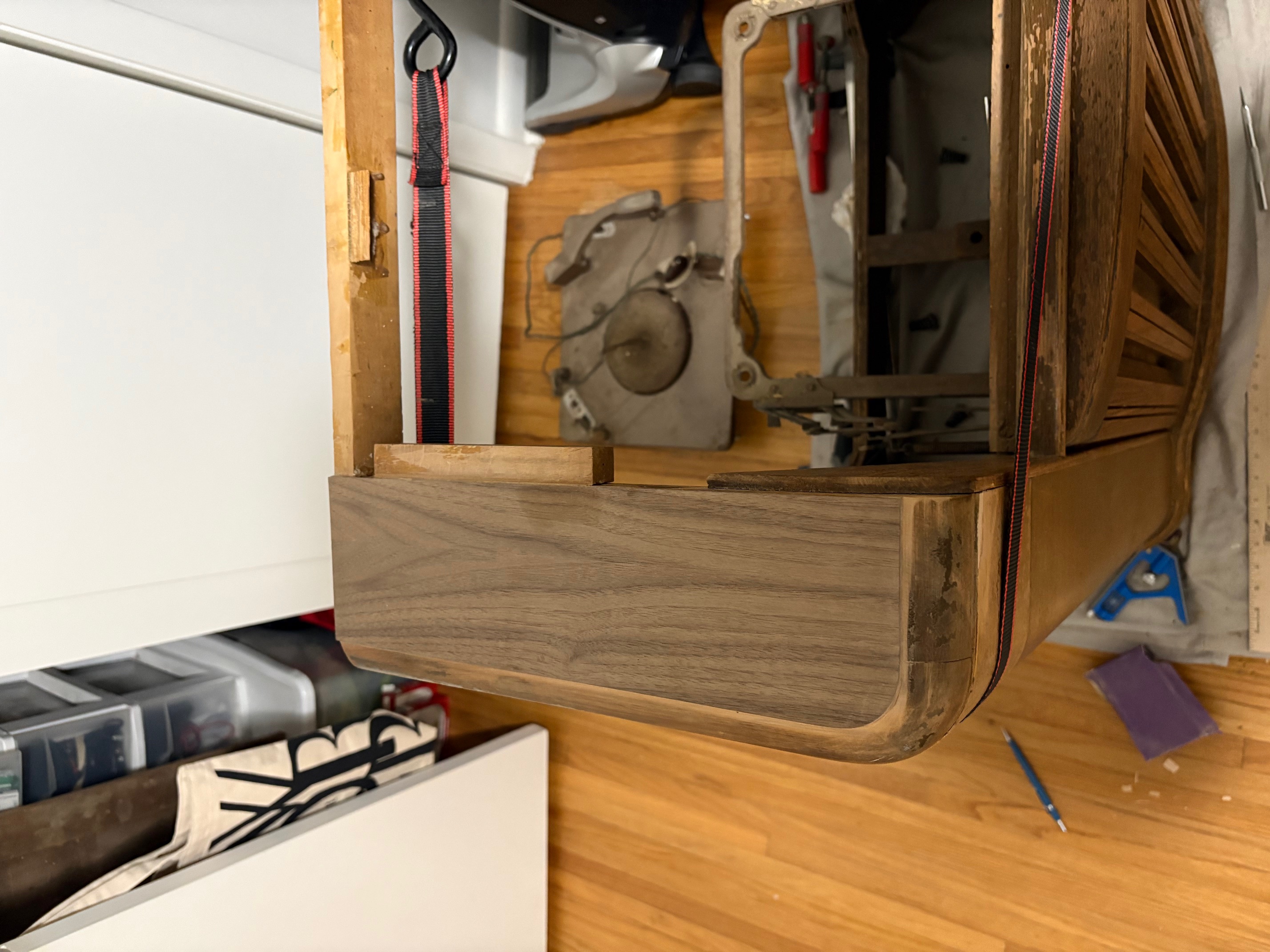
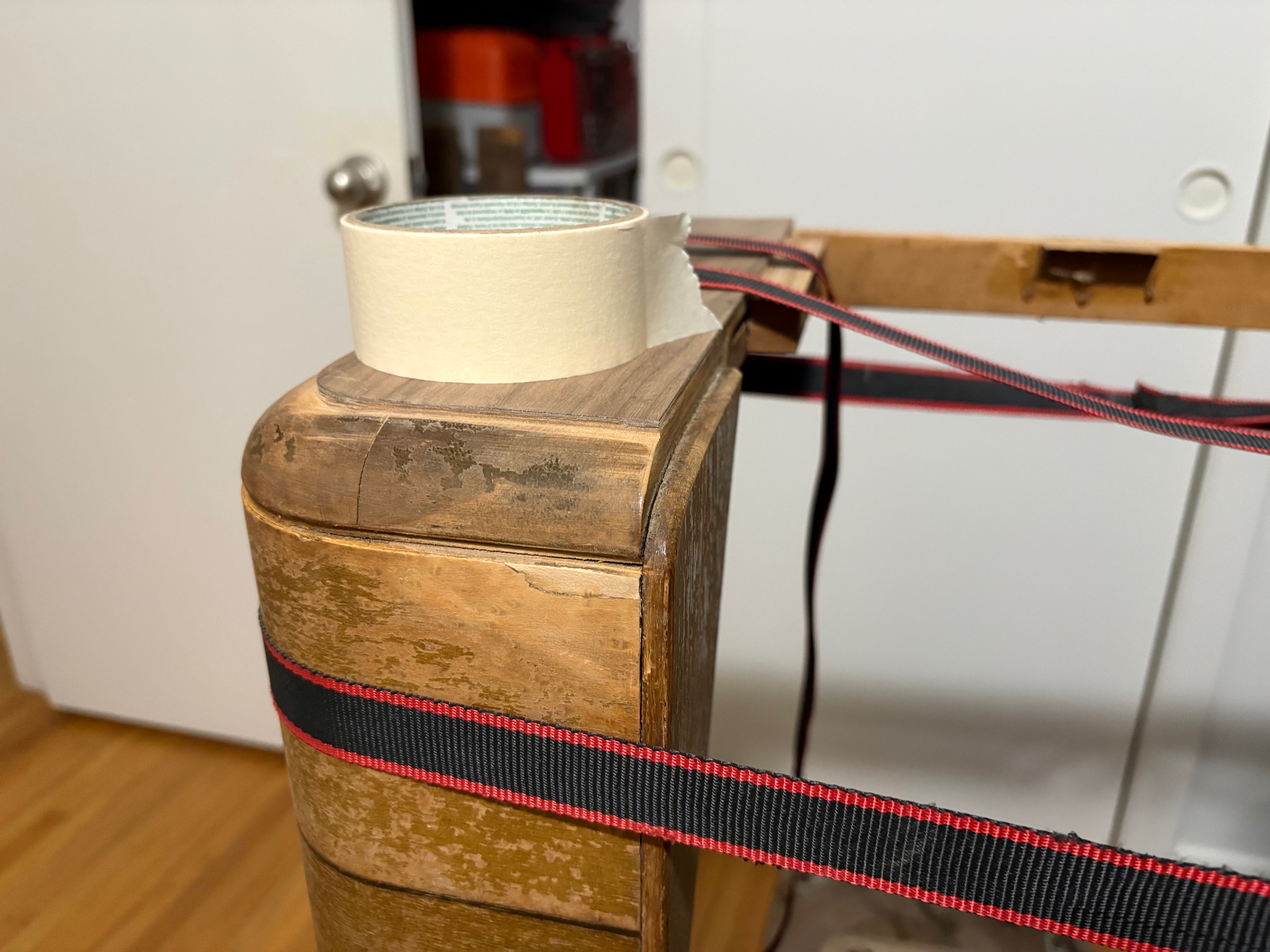
I've also replaced the veneer on the top left and right shoulders. You can see the new veneer on both shoulders in the picture above, but here's a photo of the left shoulder after I've finished refining the shape. I've still got to file the right shoulder down to the exact size.
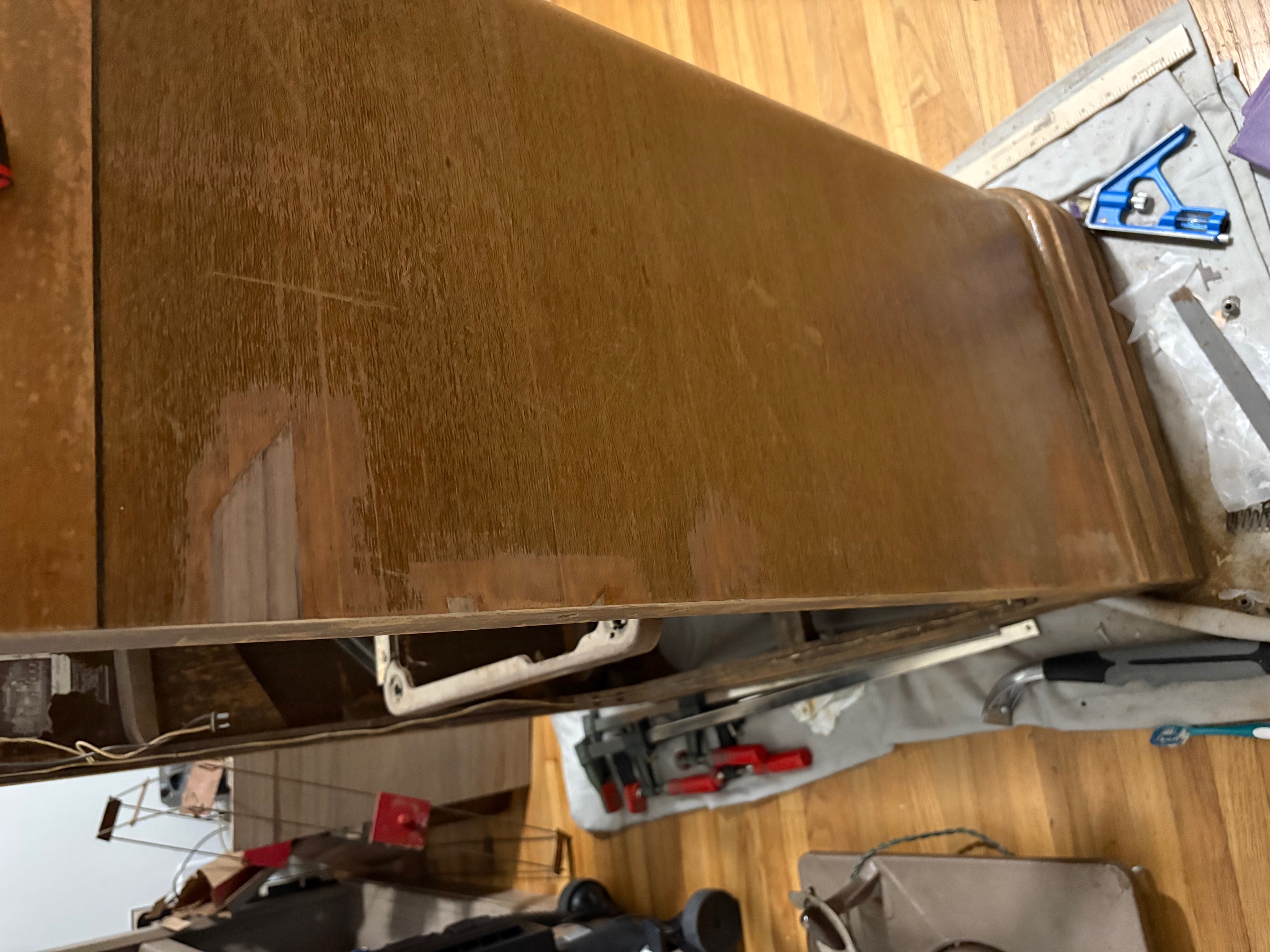
I'm also done repairing the veneer on the left panel. I'm just getting started on the right panel (which is the worse of the two, but here's a couple of photos of the repairs to the left panel. I will note that the difference in color between new and old veneer is obvious, but I have had GREAT success with a new two-part wood bleach I found. It strips the purple-grey color from the new veneer, leaving it much better matched to the old. I still need to entirely strip the console, and then I'll hit it with the wood bleach. But I tested it out with a small bit of veneer I kept from the top, and I was happy with the results.
I got to talking away with David (the store owner) about our ongoing projects, and he asked me what I'd be working on that would have a 12" driver in it. I was showing him some photos of the console, and he asked me about the turntable. In particular, he wanted to know if I was going to restore it. I told him no, that I was instead thinking of finding a 1950 or newer turntable to install so I could also play 33's and 45's. To just my luck, David had been sitting a newer turntable that he'd rebuilt for a customer who never came to pick it up! This is a 1970's GE Made Made Diamond turntable (the Man Made Diamond series was made in the 1960s and 1970s, but I conclude that this one is definitely from the 1970s because they featured a metal tone arm for the stylus in earlier models, but went to chrome-colored plastic arms in the 1970s). It's a bit newer than what I was originally looking for, but I think it will do well! I decided to settle for this one for a few reasons, actually:
- It measures 14" wide by 12" deep, which is just about an inch smaller in either direction than the D-10A which came from the factory in the console.
- It plays 16, 33 1/3, 45, and 78 rpm records.
- It has an automatic player, just like the D-10A.
- The GE turntable does not have a built in pre-amp, so I can feed the output to the triode section of the 7A7F used as a preamp for the existing turntable (note that the D-10A features a dynamic pickup as well, so I'm substituting like for like).
- This is a stereo turntable. I realize that the Philco is mono, but I can sum the output using a stereo-to-mono transformer (EDCOR makes these, for instance). I actually thought it advantageous to use this newer stereo turntable because the stylus will be designed to move up and down in addition to the left-to-right movement used on mono-only turntables. Playing stereo records on a turntable with a mono cartridge can damage the disks and the cartridge, and I don't want that!
- David agreed to sell it to me for the price of the parts he put into it.
Here are some photos of the turntable. You can see I removed the chrome-colored plastic trim, because it didn't match the style of the Philco. I will need to fashion a flange plate to adapt it to the existing tray, but that won't be too difficult.
Back to the discussion of veneer work. Here's a quick photo of the top panel I re-veneered, reinstalled in the console. I've dry-fitted it here, because I need to do a few more repairs before permanently installing it.
I've also replaced the veneer on the top left and right shoulders. You can see the new veneer on both shoulders in the picture above, but here's a photo of the left shoulder after I've finished refining the shape. I've still got to file the right shoulder down to the exact size.
I'm also done repairing the veneer on the left panel. I'm just getting started on the right panel (which is the worse of the two, but here's a couple of photos of the repairs to the left panel. I will note that the difference in color between new and old veneer is obvious, but I have had GREAT success with a new two-part wood bleach I found. It strips the purple-grey color from the new veneer, leaving it much better matched to the old. I still need to entirely strip the console, and then I'll hit it with the wood bleach. But I tested it out with a small bit of veneer I kept from the top, and I was happy with the results.
Joseph
Philco 39-750 EZ
Philco 46-480
Philco 47-1230
Philco 48-482
Philco 49-906




