Posts: 1
Threads: 1
Joined: Jun 2025
City: Broken Bow
State, Province, Country: NE
Posts: 2,263
Threads: 164
Joined: Jan 2013
City: Westland, MI
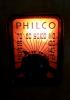
Welcome to the Phorum, jacques! Looks like a very restorable Philco 70. I've seen worse cabinets. It looks like its' been serviced in the past (different tubes manufacturers), and the escutcheon was re-installed crooked. It's also missing the tube shield. Looks like mice enjoyed the warmth looking at the surface rust. All in all a desirable radio in need of a full chassis and cabinet restoration. Also in its' favor is it isn't a console. I wouldn't make an offer without seeing the circuitry underneath. Take care, - Gary
"Don't pity the dead, pity the living, above all, those living without love."
Professor Albus Dumbledore
Gary - Westland Michigan
Posts: 5,652
Threads: 56
Joined: Sep 2008
City: Sandwick, BC, CA
It is not a model 70, it's a battery operated equivalent called a model 35, which was typical of a radio used on a farm from those days: https://philcoradio.com/gallery2/1931b/#...Baby_Grand Here is the service info: https://philcoradio.com/library/download...l.%201.pdf They are probably less common then the AC powered model 70s, but at the same time that makes them less appealing to many.
Regards
Arran
(This post was last modified: 06-25-2025, 08:19 PM by Arran.)
Posts: 5,584
Threads: 291
Joined: Nov 2012
City: Wilsonville
State, Province, Country: OR
I agree with Arran its a 35. Has the rosette screws holding the speaker in place and is missing the power transformer. The fact that its battery operated makes it less desirable to some, particularly because it requires 4 separate battery voltages to operate, 67.5v, -22.5v, 2v, and 135v.
You said there were 5 radios that you inherited. If you could include pictures of all 5 we might be able to let you know if you have something really special. A Philco 70 sold on eBay in May 2025 for $215 in unrestored condition with a good condition cabinet. The model 70 is one of the more collectable Philco radios. Most radios from the 30's and 40's sell for less than that in unrestored condition. It depends very much on the condition of the set.
Posts: 2,263
Threads: 164
Joined: Jan 2013
City: Westland, MI
I should have looked closer before I mistakenly said it was a 70. I didn't look any further than the escutcheon and that "7". Thanks for correcting me gentlemen. Take care, - Gary
"Don't pity the dead, pity the living, above all, those living without love."
Professor Albus Dumbledore
Gary - Westland Michigan
Posts: 3,186
Threads: 226
Joined: May 2008
City: Omak
State, Province, Country: WA
Hello Gary,
Everyone has their off moments first clue no power transfomer !!
Sincerely Richard
Posts: 2,327
Threads: 23
Joined: Jul 2020
City: Greenlawn
State, Province, Country: NY
First off, Jacque, Welcome to the Philco Phorum, a Phamily Phriendly Phorum of Philco Phans Pfull of Phun Pfacts. (See a pattern here?)
Unfortunately, I have no idea of value for this radio. It is my belief that the market for antique radios may be depressed due to several reasons, the largest being the age of the average collector and either the downsizing of their collections as they move into smaller "adult" communities or estate sales due to the passing away of the collector.
If using marketplaces such as eBay as a guide, be sure to look not at the offered "Buy it now" price, as these can be somewhere between unrealistic and downright ridiculous. However, actual sale prices can be misleading due to how many similar radios are currently on the market, etc.
Having said that, in my humble opinion, you have a real piece of history. I have always been interested in farm radios. You have the farm version of an iconic radio in one of the most iconic and beautiful cabinets that Philco (and other manufacturers) ever made. This is the farm version of the Philco Model 70, one of Philco's first Superheterodyne radios (licenses had to be purchased from RCA). The farm version has very similar construction and circuitry, except for the fact that there is no power transformer or rectifier and an additional stage of AF amplification. Since permanent magnets were bulky, expensive and not so per anent until the invention of AlNiCo V magnets, "electrodynamic" speakers (speakers with a field coil as a magnet) were popular in AC sets while farm sets used a permanent magnet speaker. Note the massive magnet on your speaker. This is possibly the reason for the crack in the front panel of your cabinet. Nonetheless, except for somewhat weaker audio output (0.8W for the 35 vs about 2W for the 70), this farm set (35) has all the sensitivity of its AC equivalent (70). This set ran on a 2V storage battery for the filaments which had to be recharged, by a service station and three 45V "B" batteries which had to be replaced after about 100 hours if use. A 22.5V C battery would last more than a year as very little current was drawn for grid bias from this battery. Considering the remote location and expense of the batteries, the farm radio was likely used sparingly, usually for crop reports, Sunday religious programs the occasional Saturday night entertainment and news of the growing troubles in Europe and Asia which culminated in WWII.
If you want to restore and use this radio, here are the following issues:
- Replacing missing tubes and components. The tube types used in this set are not the most common types, but should be available on the various auction websites.
- Recapping. This should be no more difficult than recapping a line powered radio, and possibly easier.
- RF, oscillator and IF coils. The primaries of these coils have been known to fail, requiring rewinding of these primaries. This is not impossible and instructions are in our library.
- Power. This may be the most difficult issue. Since this set runs on batteries which are no longer available, an external power supply such as an ARBE III (about $170.00) or a home built power supply is needed to operate this radio. Coming up with 135V worth of 9V or AA batteries and 3V worth of D cells is possible, but not exactly cheap. Building a 135V DC supply is not too difficult, but building a stable 2V DC supply for the filaments is not easy. 3V "wall warts" are commonly available but the voltage has to be dropped to 2V. This can be done by external resistors by adding up all the filament current drawn by these tubes, then calculating the resistance needed using Ohm's Law.
I am a lifelong (70 year) resident of the Huntington Town area of Long Island, NY. Long Island had a rich history of vegetable farms (especially potatoes), dairy farms and duck farms. However, due to post WWII suburban sprawl, parasites that destroyed potato farming and other environmental concerns, farming is no longer the industry that it was. However, one unique thing about farming on Long Island is that due to its proximity to New York City, Connecticut, sea lanes, etc., mechanization, transportation, electricity, telephone and water and other infrastructure were readily available. No sod houses or log cabins here. Therefore, farm sets were not popular here. However, many other rural areas of the country did not have power until rural electrification projects like the Tennessee Valley Authority and other rural electrification projects in the 1930s through 1950s in the US brought reliable utility power to farms.
In the beginning of radio, all radios were battery powered until between 1925 and 1928 where power supplies and tubes whose heaters could be run on AC were developed. However, several schemes of battery power were used on farm radios depending on the area of the country, whether 6V or 30V lighting generators or windmills were popular in the area, whether the farm owned cars trucks or tractors that used 6V batteries in their electrical systems, how near in the future electrification was coming to the area, etc. Based on the fact that the house where the radio was found was built of sod, I would have to assume that the area was "off the grid" for a long time.
Hope this helps. Keep on posting, and again, welcome to the Phorum!
"Do Justly, love Mercy and walk humbly with your God"- Micah 6:8
"Let us begin to do good"- St. Francis
Best Regards,
MrFixr55
Posts: 18,427
Threads: 622
Joined: Oct 2011
City: Jackson
State, Province, Country: NJ
Were it a 70, the asking value would be over $100. Probably $200.
The prices have recently dropped; but 70 is still holding.
I do not know about battery radios.
However a 70 cabinet in good shape might make it somewhat valuable for those looking for one, even if 35 is less desirable.
One thing I am not sure of is the speaker mount: it might be different for 35, but I am sure a person with right skills can take care of it.
People who do not drink, do not smoke, do not eat red meat will one day feel really stupid lying there and dying from nothing.
Posts: 2,263
Threads: 164
Joined: Jan 2013
City: Westland, MI
+1 for an ARBElll battery eliminator. These things are built bullet-proof. In all fairness, I do not own any farm radios. I have an Atwater Kent 20 big box, and a Freed Eisemann NR-7. Still, how could I miss no transformer? Take care, - Gary
"Don't pity the dead, pity the living, above all, those living without love."
Professor Albus Dumbledore
Gary - Westland Michigan
Posts: 3,186
Threads: 226
Joined: May 2008
City: Omak
State, Province, Country: WA
Hello Gary,
You need to get yourself at least one farm radio I have a few in my collection one of them ins a Philco that I got from Ron some years ago.
Sincerely Richard
Posts: 431
Threads: 9
Joined: Apr 2023
City: Roanoke
State, Province, Country: Virginia
I agree with Richard. After decades building my small collection I recently acquired my first farm radio - Motorola 45B12. It may be a while before I restore it. Some of the joints in the wooden frame have come apart but that is fixable. The cabinet is in pretty good cosmetic condition, and the set is complete. I plan to build a battery eliminator (with removable power cord and a hidden socket) disguised as an Eveready 759 battery. Robert Lozier was kind enough to supply scans of the original graphics for that large A/B battery.
Dale H. Cook, GR/HP/Tek Collector, Roanoke/Lynchburg, VA
https://plymouthcolony.net/starcity/radios/
Posts: 18,427
Threads: 622
Joined: Oct 2011
City: Jackson
State, Province, Country: NJ
I do not own any farmers.
Next best thing that gives one an idea how they perform is a portable battery set, like a Zenith T/O.
(Which BTW, namely H500 from my collection, I took with me to FL and listen to it during evenings while sitting in the Floridian. Manure smell is missing to complete the picture. But when I take it to Renningers, the picture is quite there  ).
People who do not drink, do not smoke, do not eat red meat will one day feel really stupid lying there and dying from nothing.
Posts: 2,327
Threads: 23
Joined: Jul 2020
City: Greenlawn
State, Province, Country: NY
Right now, I have 4 farm sets and a spare chassis for one of them.
One, an RCA 14BT2 has the same design as a "battery only" portable of the same era. 5 Tube superhet using the 1.4V tubes introduced by Sylvania in 1938; the 1A7 convertor, 1H5 IF, 1N5 Det / 1s AF and 3Q5 output. Runs on 1.5V 1, 90V B. Sensitive, tinny output, just like my BFG Mantola 419 with the same tubes except a 1Q5 instead of a 3Q5. Dale, this radio is very similar to your Motorola 45B12.
My Coronado 650 is a bit of an upgrade from this RCA except it is a little older. 90V B, 2V A. 1A6, 1A4, 30, 1A4 and 2 Sylvania 950s in parallel, I think about 0.5W output into a 6" PM speaker. Dunno how it sounds, as I don't have an opt tranny (open primary) or osc coil (mice got it), but I suspect slightly better than the 14BT2.
The other 2 are interesting, they are a 1937 RCA 5BT and a 1936 RCA 6BT (with a spare chassis). Circuitry is very similar for both sets except that the 6BT has one Shortwave Band in addition to the AM, and uses a pair of 49s, while the 5BT uses a 19, both class B output circuits. Other tubes are a 1A6 convertor, 1A4 IF, 1F6 Det / 1stAF, and 30 driver for the Class B output stage. Both sets have an 8" PM speaker with a rather hefty magnet. The 6BT has SW. Both sets run on 2V A and 135V B, with a C Battery for bias on the driver and output stage. Both radios have performance almost like a line power radio such as the 5T. The 6BT has an option that I do not have, a Vibrator supply for the B+ instead of the batteries. The interesting part of this is that from a 6V storage battery, they relied on the straps that connected the cells together (Remember them, they disappeared in the 1960s) as "taps". 2V for the filaments and 4V for the vibrator power supply (I guess that they wanted an even discharge of the individual cells of the battery).
Other 6V farm sets had very similar to car radios of the era with rather good selectivity and sound output. Zenith made models with Class B Outputs using 19 or 1J6 or more conventional single end pentodes. One model (I can't find it right now) was selectable between 6V DC and 115V AC. Zenith also marketed the "Wincharger" 6V battery charger.
Another interesting group are those sets that ran on 32V DC. Delco (GM) Fairbanks Morse, Silvertone (sears) and others made these. Some had vibrator supplies and well known 6V tubes. Others used no vibrator and used the "48" as an output tube either single or more likely push pull. The 48 could run with a 30V filament and plate supply. Apparently 30V was enough for the other tubes also.
Farm sets were available in plain or fancy table model cabinets and floor model consoles. Kind of interesting that my RCA 14BT2 was available as the 14BK console, the same chassis with the same puny output into a 6" speaker.
I have rarely seen console versions of farm radios on the auction sites. I suppose that either they were not popular or did not survive rural electrification. Often, radio stores that either existed before the town was electrified or opened after electrification would hold "trade in" promotions and at the end of the promotion a bonfire celebration was held where these traded in battery sets were burned in the bonfire.
"Do Justly, love Mercy and walk humbly with your God"- Micah 6:8
"Let us begin to do good"- St. Francis
Best Regards,
MrFixr55
Posts: 3,186
Threads: 226
Joined: May 2008
City: Omak
State, Province, Country: WA
Hello Dale,
very cool Idea and Idea I thought of is restore a farm set and give to a friend's daughter as a gift who happens to live on a farm /ranch .
Sincerely Richard
P.S. one of my little Farm Sets Was once owned by Late Dale Davenport it's a little little Emerson made out that cardboard .
my Biggest set is a RCA Console that I plan to restore the chassis this winter !
Posts: 5,652
Threads: 56
Joined: Sep 2008
City: Sandwick, BC, CA
I have owned a few battery console sets over the years, some I wish I had kept like a Grimes-Phonola built "Serenader" from 1937. I suspect that the reason they don't show up on fleabay is much the same reason that AC consoles don't show up as much as table sets, the shipping costs, with the battery power being an additional handicap. In fact I don't see 1/2 of what I used to see on that site as I did even ten years ago, maybe 1/4 what I did 15-20 years ago, between craigslist, and fakebook marketplace there is just no advantage is selling on fleabay, in fact it's a lot of hassle.
I can name one feature of a battery console model that they have over a table model, there is lots of room for a power supply as they typically had a shelf in the bottom for battery storage. When the 2 volt tubes were common many had a built in rheostat, and volt meter so you could power the tube filaments from a 6 volt car battery, the Serenader had one of those, though one could just use a pair of the taps on the car battery to get the 2 volts, but maybe they just wanted a bit of headroom as the cells discharged.
Another type of "A" battery I have seen mentioned in battery sets is an Eveready "Air Cell" which put out 3 volts, so the set had a pair of screw terminals, with a dropping resistor on the backside, when you used a wet cell you used a wire jumper across the terminals, when you used an "Air Cell" you removed the jumper. I think that the "Air Cell" was just a pair of carbon zinc dry cells in series, hence the 3 volt output.
Canada never had a "New Deal" with a rural electrification program in place, so battery powered tube radios were around longer, and designs taken more seriously by manufacturers. Quite a few sets, even with the 1.4 volt tubes, had tuned RF amplifier stages, or extra IF amp stages, shortwave bands, and the odd higher end model had either push pull , or parallel audio output stages. The reason for the parallel outputs was that the owner had the option of turning one of the tubes off to save battery life. Electrification did take place in rural areas, but it was piecemeal, and it was often a provincial owned power company that did it, like between one of the big cities, and a hydroelectric power dam, or some other industrial project, where they would be building transmission lines anyhow.
Anyhow I looked up the schematic of that Philco model 35, it does follow the concept of the model 70 pretty closely, including a tuned RF amplifier stage. The power output is a single ended #33 pentode, so pretty similar to a single ended #47, though I think the #33 sounded a bit better fidelity wise. The #33 was a popular choice in many 1930s battery radios, right up until 2 volt octals came out in 1938. My Stewart Warner vibrator radio uses one, and in theory they can put out over a Watt, since the vibrator supply can put out up to 180 volts on the plate and screen grids, on a straight battery set they usually topped out at 135 volts. When I get that set working I am planning on powering it from a SLA, a sealed lead acid battery.
Regards
Arran
Users browsing this thread: 1 Guest(s)
|
|
Recent Posts
|
|
Philco P45-6365 Universal Transformer Instruction Manual
|
| Can anyone guide me to where this may be found?GRG — 03:00 PM |
|
54C Complete Teardown/Rebuild
|
| I don't think that I have encountered a 12Z3 before, curious how it uses one of those but includes a #43, which is a 25 ...Arran — 02:17 PM |
|
HiFi (Chifi) tube amp build - but my own design.
|
| It's the other forum. I'm also in DIY, but mostly read there. Honestly, I kinda jumped into this without much thought to...TV MAN — 10:43 AM |
|
Philco 71 Code 125
|
| Hello,
I am in need of a schematic for this radio. Mine has the three separate circular tube shields and a shadow me...dconant — 08:06 AM |
|
Stromberg Carlson 1500 Squeal
|
| And life just keeps getting more complicated.dconant — 07:57 AM |
|
54C Complete Teardown/Rebuild
|
| Hello Roy,
here is this one
sincerely Richardradiorich — 12:45 AM |
|
54C Complete Teardown/Rebuild
|
| Richard,
Had grabbed it already but thank you just the same. I find myself wanting to find some way to block out the...glyphmon — 12:03 AM |
|
54C Complete Teardown/Rebuild
|
| Hello roy,
here is a link to the schematic .
Sincerely Richardradiorich — 11:54 PM |
|
54C Complete Teardown/Rebuild
|
| Richard,
The Silvertone 2014 also is a transformerless set, so I am incorporating a 1:1 600 ohm audio isolation transfo...glyphmon — 11:37 PM |
|
Preliminary work on wife's Silvertone 2014
|
| Did an alignment today which was interesting. IF alignment went great, almost all was already spot-on. Adjusting on th...glyphmon — 11:35 PM |
|
Who's Online
|
| There are currently no members online. |

|
 
|