

01-23-2026, 03:16 PM
We could probably do a whole thread on "Things I really messed up!"

|
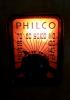
1946 Telechron 8H59 "Musalarm"
01-23-2026, 03:16 PM
We could probably do a whole thread on "Things I really messed up!"

01-23-2026, 03:50 PM
Hi Klondike,
Here is my contribution to the "Things I really messed up" thread: Years ago, I attempted to repair a power supply for an HP 2225 computer terminal. Had no schematic for it. Found a Zener diode across the 5V power supply, shorted. OK, I'll just "dike" (cut) that out with my diagonal cutters, power it up and see if that fixes it. OK, it didn't blow the fuse, but no vid-, oh what's that crack, crack, crack noise. Oh look, all those chips look pregnant! Oops, smoke!! Then the output filter cap blows off the board about 8 feet, trailing confetti behind it. My coworker is out the door about to pull the fire alarm; I wet myself laughing. Post-mortem, this was a standard for the time, analog regulated power supply, 15V in, 5V out. The pass transistor had shorted, putting 15V out the 5V terminals. That had caused the 6V Zener diode across the 5V output to short, taking out the fuse. When I diked out the Zener and replaced the fuse, I put 15V through the whole 5V logic circuit. Made the terminal disappear. "Do Justly, love Mercy and walk humbly with your God"- Micah 6:8 "Let us begin to do good"- St. Francis Best Regards, MrFixr55 
01-23-2026, 05:11 PM
Well, this was not exactly my fault but:
In the year 1986 I was servicing a Soviet-made (well, Soviet-Polish; the CPU was made in Ukraine and the rest of Mera-CAMAC computer was made in Poland) mini-computer, a PDP11-34 clone. The processor designation was Electronika 100-25. (This is its front panel). The processor was mounted on rails in its stand and could be rolled out or back in. The boards were inserted on one side and the back was wire-wrap type. Whoever have seen wire-wrap panels, knows that the pins of the connectors, that were wrapped with wire, were very rigid. And very sharp at their ends. So, upon having serviced it (taking boards out, dusting the board edge connectors, cleaning the edges with some good quality grain alcohol) I rolled it back. It so happened that near the wire-wrap pins there was a cable that powered the cooling fans (220V of course). The cable was not jacketed - just the rubber-insulated wires. The wire-rap pins grazed it as the processor was moving back, and the computer stopped. This computer (whopping 256kBytes of semiconductor DRAM, freshly installed to replace 4 cubes of 64kBytes each of core memory) was powering the whole research facility. Then there came my boss. His first reaction was very emotional. I explained what happened. So, while he realized I was not at fault, but then he tole me that I would have to fix it. Suffices it to say, the pins were some handshake signals on the UNIBUS. So, every device connected was affected. I spent 2 weeks pulling every board, diagnosing it, replacing the driver chips. Some nights too. No weekends. I fixed it. It was fun. People who do not drink, do not smoke, do not eat red meat will one day feel really stupid lying there and dying from nothing.
01-28-2026, 07:28 PM
OK, back to the Telechron. Time to be a horologist and get the clock mechanism sorted out. I mentioned I had found an 8H61 Telechron Switch Alarm as a parts donor and possible drop in replacement. There were two main differences between the Switch Alarm and the Musalarm radio clocks, i.e. the dial face has different names on them and more importantly the time setting knob shaft on the Musalarm radio is about 2.5 times longer than on the Switch Alarm.
To swap out the Time Set Shaft Assembly (7) you need to remove knobs 1 & 3, the glass and front eschucheon (easy, a few metal tabs to bend up), Time Set Knob (14) and finally the Front Plate Assembly (4). Once the Front Plate Assembly is off, all the gears become loose so unless you want to rebuild the entire gear assembly you need to hold everything carefully upright. I don't have a pic of it in this state since I did not have a third hand but this is a photo of it before the Front Plate on the left comes off of the original Musalarm clock mechanism. The Time Set Shaft can be pulled out what was the Front Plate Assembly BUT note that there are two spacers you need to watch for (5) and (6). Of course it never goes quite as smoothly as you would hope. I had thought I had finally gotten the longer shaft installed, all the gear and posts in their correct bushings, and the Front Plate snapped into place when I realized the Alarm Set Shaft (15) was loose and missing its spacer (17). Took it apart again and fixed that only to realize the Switch Shaft Assembly was missing its spacer (20).  I guess a few things fell off that I had not seen. Never the less I finally got it all back together so it has a better looking eschucheon, two knobs and hopefully, will work when put into the radio!
02-01-2026, 06:53 PM
On to the radio, just a simple install of the 3 electrolytics into the space where the old can was.
I used the cardboard sleeve that covered the can to also cover the new electrolytics without trying to stuff them back into the old can. Paper caps were replaced. The space was pretty tight to get down to the tube pin lugs but it worked out. Three of the 4 tubes were bad so those are now replaced as well. After temporarily rewiring in the clock, it all checked out on the bench and was working. A number of stations came in pretty well with a four foot wire antenna. Now I just need to remount the clock and radio into the cabinet, check the alignment and this one should be done. I'll post a photo of the finished radio when it back together.
02-01-2026, 07:22 PM
Bob
It's kind arare to see 3 outa 4 tubes bad. You should go and play some lottery. People who do not drink, do not smoke, do not eat red meat will one day feel really stupid lying there and dying from nothing.
02-01-2026, 07:37 PM
Yes I thought so as well but 2 were stone dead and one was just into the bad reading ( on my Jackson 648R tester).
02-01-2026, 09:49 PM
Morzh, I remember the PDP11. Was working for a 3rd party bio-med company who was authorized service for American Optical Medical. One of the VA Hospitals had this CAMS (Cardiac Advanced Monitor System) that used a PDP 11 and a gigantic hard disk drive (dunno the capacity, but I assume that it was less than 10 MB). The purpose of the computer was to capture about 10-30 sec of EKG on monitored patients before an "event" such as a MI, outbreak of tachycardia, PVCs, etc. for about 20 beds. As I remember, the thing was about 10 ft long x 5 ft high x 3 ft deep, not including the hard drive. I never had to actually service the computer, my job was to change the disk and reboot it. Had to set the boot address with all those switches in the front of the conputer.
"Do Justly, love Mercy and walk humbly with your God"- Micah 6:8 "Let us begin to do good"- St. Francis Best Regards, MrFixr55
02-01-2026, 10:05 PM
Bob NICE JOB ON THE TELECHRON!!!!
"Do Justly, love Mercy and walk humbly with your God"- Micah 6:8 "Let us begin to do good"- St. Francis Best Regards, MrFixr55
02-01-2026, 10:28 PM
mrFixr
Not only I serviced and fixed these (including he microcode ROM), I had to once fix the 29MB disk drive that came bad from the factory (Bulgarian built, IZOT was the company's name). I described it somewhere, but my boss got at it first and diagnosed it to the "bad" sector label sensor, so he...well, he pried out potted coil out of it. And then, for nothing better to do, he subbed it with a small coil from his guitar pickup (about 100 times less turns) and potted it with... rosin. Eventually he gave up. I took over. The initial problem was not tightened nuts on all the lug contacts (not just not tightened...loose by 3 or so turns) and conformal coating on all (ALL! EVERY SINGLE ONE!!!) boards' card edge connectors that plugged into the backplane. Once done with this, I then built an amplifier, mounted it on the pins of that sector sensor (they were stubby and rigid enough, and the amp was an OpAmp with the RC delayed input) so I amplified that 10mV (instead of 2V) signal, and then phase-shifted it, using potentiometer and different caps until the label came in just in time. I had to delay it by one turn exactly (no good OpAmps at the time, so the amplified signal cmae late, and had to be delayed then). It worked then. For some years. Even after I left. Oh...and the cracked traces in 4-layer UNIBUS-MAP unit's board...and in memory also (2MB...whopping 2MB). I spent 2 or 3 weeks with that monster. And I did no have to, but I loved the stuff...so I did. And then this strengthened my reputation, which was a bonus. But that was PDP11/70. The newer one, we bought two. That was purely Soviet built, no Polish parts in the computer itself. People who do not drink, do not smoke, do not eat red meat will one day feel really stupid lying there and dying from nothing.
02-01-2026, 10:48 PM
Funny, Morzh, those things took up a whole room. the laptop sitting on my lap has more power than the PDP11. An iPod has more power than those things (I think). Never got to take one of those apart, my actual servicing of computers started with 8080 machines that were embedded in our chemistry analyzers, then the IBM PC, then ATs, then 386s, and so on and so on and so on.
"Do Justly, love Mercy and walk humbly with your God"- Micah 6:8 "Let us begin to do good"- St. Francis Best Regards, MrFixr55
02-01-2026, 11:06 PM
The laptop has a few hundred thousand times more power.
Today's Intel Core CPU is up to 800 or 900 MFLOPS. PDP-11 was about one-two Mflops. Today's harddrive is a few TBytes. Then time harddisk started from 5MB and into 100MB (that 100MB cartridge thing weighed like 15-20lbs). Memory. 128/256KB for PDP-11/35 or 2-4MB for PDP11/70 to today's laptop 8-16GB being standard (8 is considered kinda low today). So...yeah. More powerful. More powerful than a city block of buildings stuffed with PDP11s. People who do not drink, do not smoke, do not eat red meat will one day feel really stupid lying there and dying from nothing. 
02-02-2026, 03:01 AM
Bob;
It looks like you were using some 450 vdc caps, yep you can't restuff the original can with those. I have a lot of photoflash capacitors, technically you are not supposed to use too high of a capacity for in input filter cap, but I used 150 and 160 uf 330 vdc photoflash caps in AC/DC sets all the time and never blew up a rectifier tube. The last rectifier tube that failed in a set I had was a 35W4, ironically in a late 60s Westinghouse clock radio, and the reason it failed was because the 50C5 power output tube was loose, so it would periodically loose contact, and regain it, with a bunch of static, and I think it blew out the cathode connection in the 35W4. I seated the 50C5 in it's socket firmly, replaced the 35W4, and it was working fine up until I quit using it as a daily driver radio. As to why most of the tubes were bad in your set, my guess is that it spent it's time in a kitchen, or garage. running 24/7, and the higher line voltage and leaky caps probably did not help. The line voltage is something you may want to address, a bigger dropper in series would the tube heaters would likely help. Regards Arran
02-02-2026, 03:05 AM
Bob;
With regards to the clock mechanism, this is why I have a collection of clocks that I saved from clock radios I parted out, most Telechron mechanisms were pretty similar, some have a sleep timer, some had a buzzer, but the motors were basically the same. Regards Arran
02-02-2026, 04:55 PM
I have used high capacity caps in several radios, mostly AA5s, but I worry now, especially when I saw flashing in a globe 80 in a Radiola 17, I figured, maybe a 100uF cap may be a bit much. I was trying to get rid of the hum to get the "room filling sound" that is indistinguishable from a live performance that RCA claimed that the Radiola was capable of. Hey, the solid state stuff uses caps of about 1000 uF or more in their power supplies, why can't I do that here? Of course, the hum comes from the 26s and 71A, even if adjusting the hum balance pots. OK, dummy (me), consult the RCA receiving Tube Manual, for maximum capacity allowed in cap input filters.
Back in the day, there was a rule to stay close to, but do not exceed, the working voltage rating of an electrolytic cap. The theory was that if you, for example, use a 50 uF 450WV cap in an AA5, the actual capacity would be significantly less than 50 uF because the electrolyte would not correctly "form" "Do Justly, love Mercy and walk humbly with your God"- Micah 6:8 "Let us begin to do good"- St. Francis Best Regards, MrFixr55
« Next Oldest | Next Newest »
Users browsing this thread: |

|

|


