Hi Pete,
First off, welcome to the Philco Phorum! A phamily phriendly phorum phull of phine pholks and phun Philco Phacts. (See a pattern here?) If you have not had the chance to do so, please read our rules and regulations, "What NOT to post", and write a little about yourself in the "Introduce yourself" section on the Phorum. Also, stop in the "Old Ron's Bar and Grill to shoot the breeze with the membership about the weather, what else you are fixing, new finds (or losses), and other phun topics.
Finally, keep posting about this topic, start a thread on any new radios that you are working on, ask questions and haved PHUN with us!
The schematic diagram for your set can be found in the Philco Library, under Service Documents. For your convenience, I am posting a link here:
https://philcoradio.com/library/download...l.%201.pdf
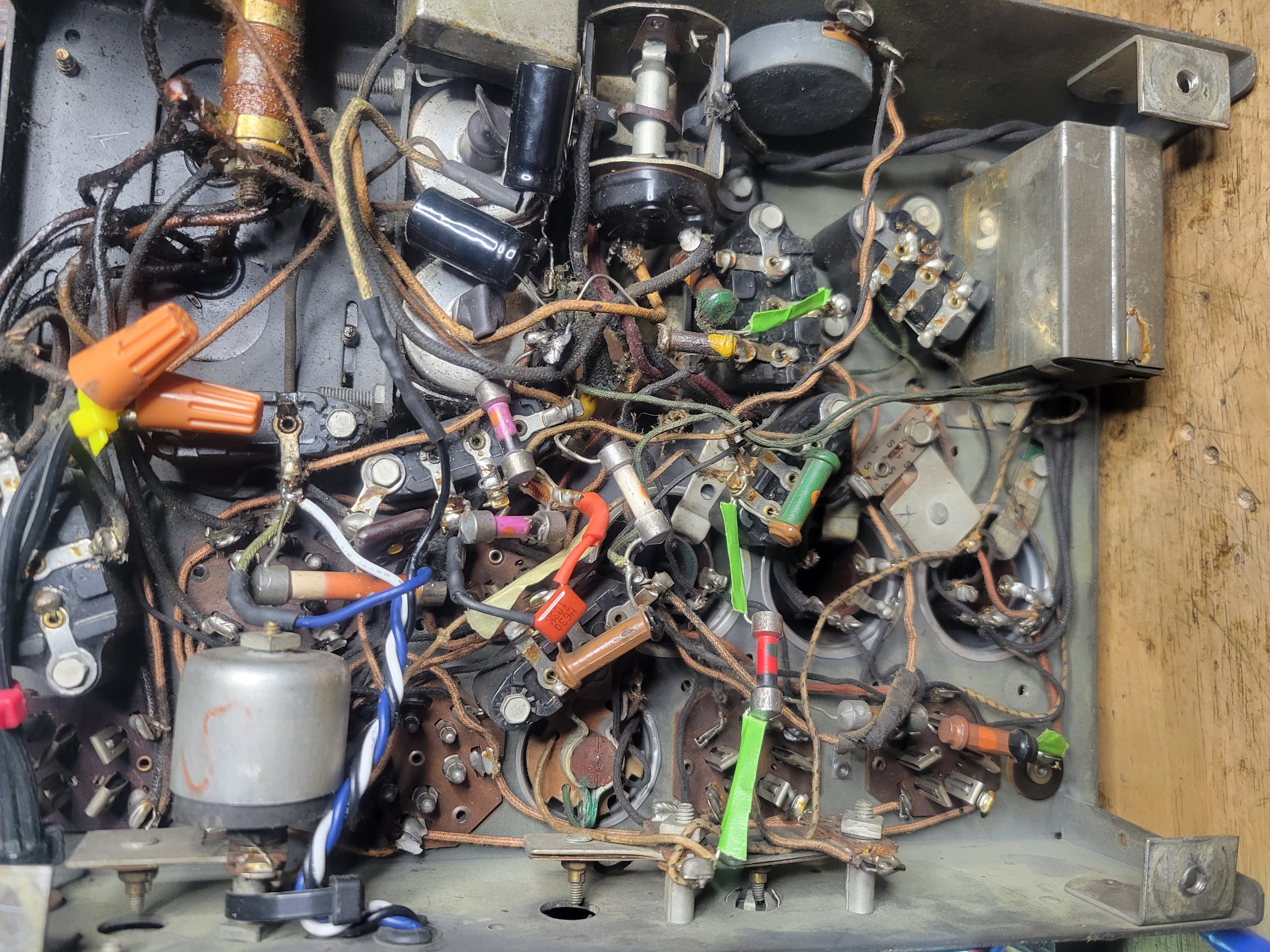
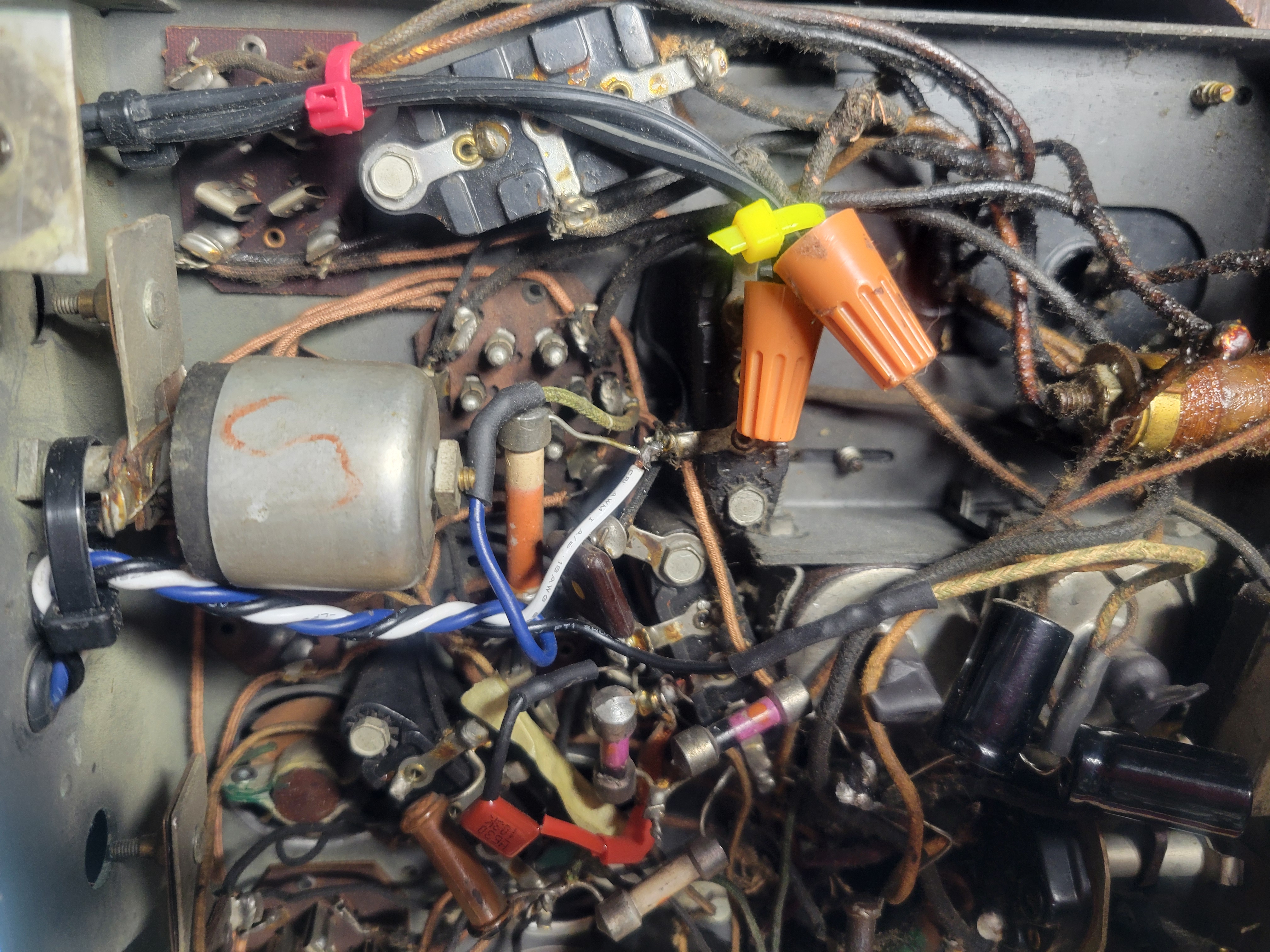
From the pictures, it appears that your radio is in rather good and unmolested condition. Congratulations on this!
If you have an 89 actually working, I understand why you might not want to mess with it. however, all older radios have capacitors that deteriorate, leak and eventually short. Of course, right off the bat, the filter caps must be replaced, which appears to be done. The audio coupling cap between the first AF stage and the Output stage must also be changed. If this cap shorts, you will drive the grid voltage so high that the tube will draw excess current and "red plate" (a red glow can be seen from the plate), destroying either the tube, the output transformer or both. If a "bypass condenser" (usually found between a screen grid and ground or cathode and ground) shorts, it will pull B+ to ground, burning out dropping resistors. Therefore, do change the caps. This is a little difficult in this set, as the caps are embedded with tar in the Bakelite "Blocks" that you see on the underside of the chassis. Some of these blocks contain 2 caps or a cap and resistor. The third page of the above diagram will show you which block contains more than one cap. Of course, we are here to provide advice.
There is a great article by Mike (Morzh) on gutting and replacing the caps in these blocks without having to remove them from the radio. For your convenience, the link is located here:
https://philcoradio.com/library/index.ph...soldering/
This is a relatively modern radio for the time, with AVC and a type 75 Diode detector / 1st AF tube. The exception is the convertor stage which uses the "autodyne" principle instead of the more modern 6A7 "pentagrid convertor" which, along with its successors, became the standard for broadcast band radios until the switch to transistors. This model uses a type 77 Pentode for the Autodyne convertor. Earlier ones used a type 36 tetrode and were quite unreliable. There is an article I believe to be written by Phorum founder, the late Ron Ramirez (God rest his soul!) regarding the 89, reproduced here:
https://philcoradio.com/library/index.ph...-model-89/
One very common issue in Philco radios of this type is the failure of the RF and IF transformer primaries and the "Tickler" of the oscillator coil. The following is a link to an article in the Philco Library under "Shop Talk".
https://philcoradio.com/library/index.ph...lco-coils/
Again, welcome and I hope that this helps!